
We had begun preparing for this event more than a year in advance. Considerable work was needed: we enlarged the hattō (ceremony hall) and the dojo, built new sanitary facilities, improved the accommodation, landscaped the surrounding grounds — and, above all, installed the bonshō, which had arrived by sea from Japan. What an adventure that bonshō was! Thanks to the generosity of Minamisawa Dōnin Zenji and the donor members of Kanshoji, we had been able to commission the bonsho from a foundry in Kyoto. To give it a fitting home, we built its bell tower with our own hands, drawing on the expertise of a carpenter who is a member of the Sangha.
Many members of Kanshoji came to help with all this work. And of course, alongside these preparations, we studied and rehearsed the ceremonies, always striving to remain faithful to the tradition.
Two qualified monks, Rev. Ito Ryukei and Rev. Iida Hōyū, came from Japan to assist us, which they did with great devotion and sensitivity.
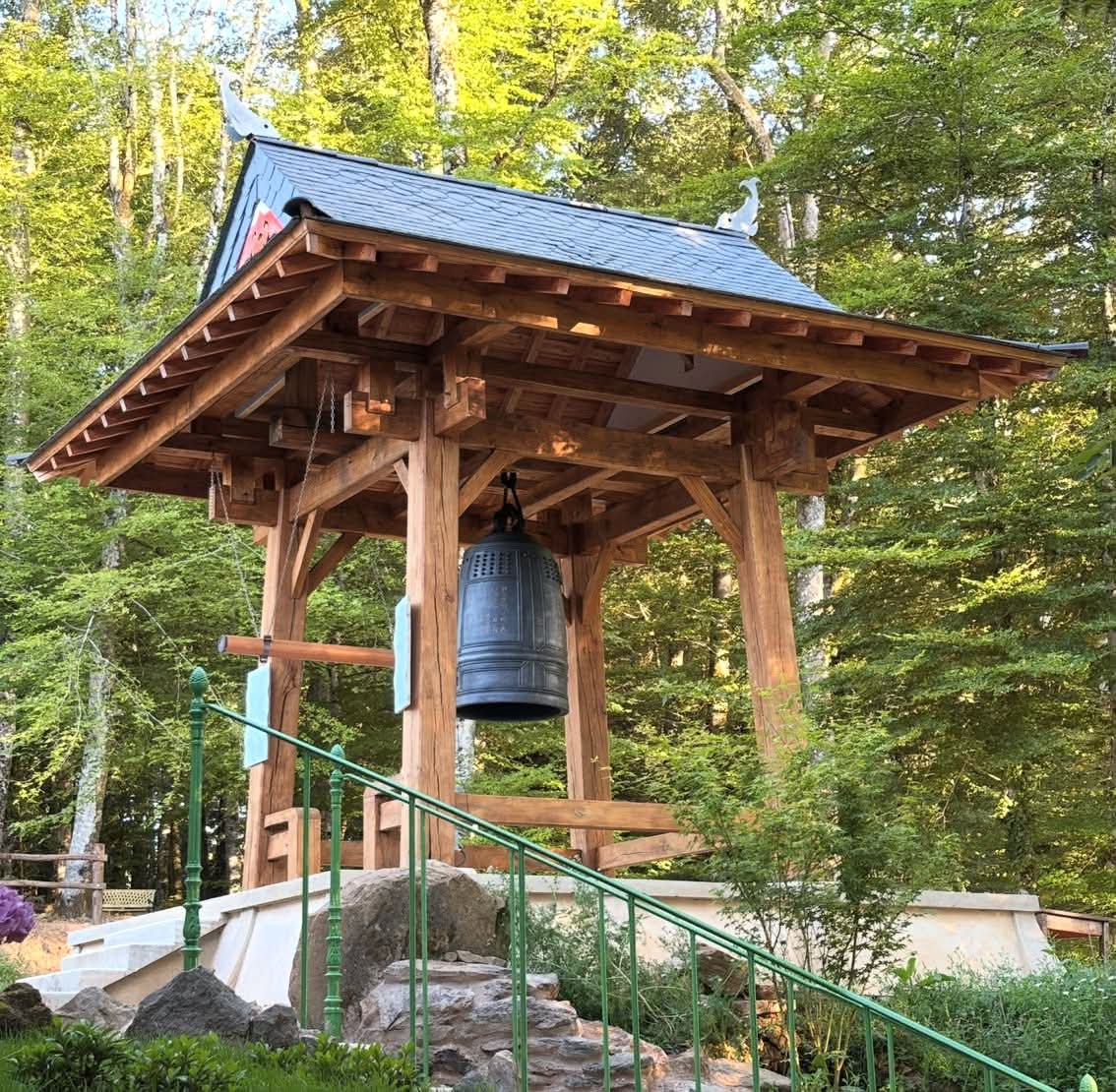
We had begun preparing for this event more than a year in advance. Considerable work was needed: we enlarged the hattō (ceremony hall) and the dojo, built new sanitary facilities, improved the accommodation, landscaped the surrounding grounds — and, above all, installed the bonshō, which had arrived by sea from Japan. What an adventure that bonshō was! Thanks to the generosity of Minamisawa Dōnin Zenji and the donor members of Kanshoji, we had been able to commission the bonsho from a foundry in Kyoto. To give it a fitting home, we built its bell tower with our own hands, drawing on the expertise of a carpenter who is a member of the Sangha.
Many members of Kanshoji came to help with all this work. And of course, alongside these preparations, we studied and rehearsed the ceremonies, always striving to remain faithful to the tradition.
Two qualified monks, Rev. Ito Ryukei and Rev. Iida Hōyū, came from Japan to assist us, which they did with great devotion and sensitivity.
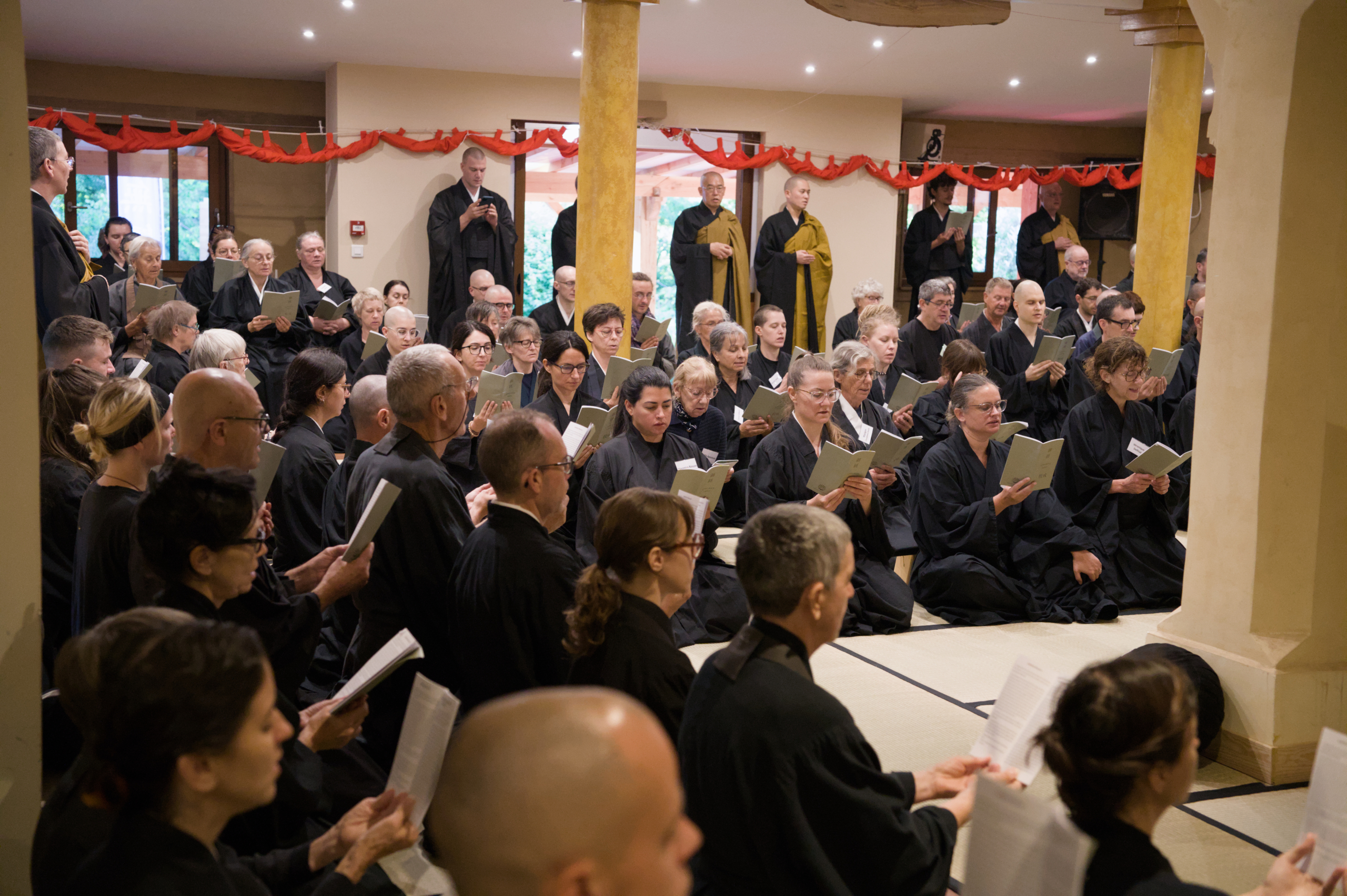
And then the great day arrived. Eighty-four kaitei, who had come to receive the precepts, forty teachers, and around a hundred assistants arrived at Kanshoji. They came from every continent and from many different countries: the United States, Canada, Venezuela, France, the United Kingdom, Italy, Switzerland, Germany, Belgium, Austria, Spain and other European countries — and, of course, Japan.
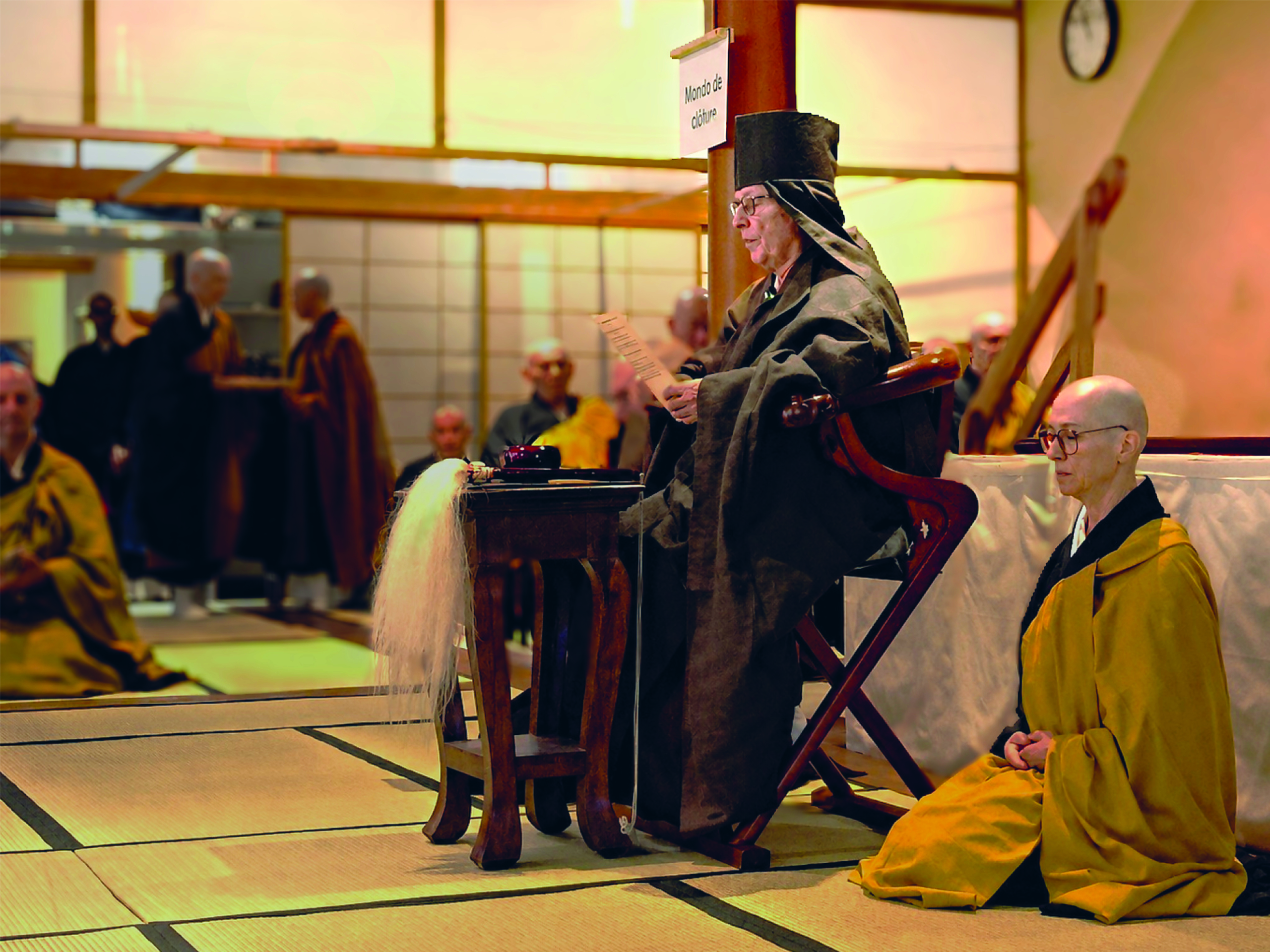
On the fourth day, we held a ceremony in honour of Taisen Deshimaru Rōshi, who established the practice of Sōtō Zen in Europe.
Minamisawa Zenji regarded Master Deshimaru’s mission with great respect. Master Deshimaru had accomplished a masterful feat by breaking through the mountain of Western illusions and opening wide for us the gate to the Buddha Way. Minamisawa Zenji therefore wished to continue this work with the same respect and ensure the continuity of the Sōtō Zen Way in the West by introducing the practice of O-jukai in its traditional form.
— Taiun Rōshi
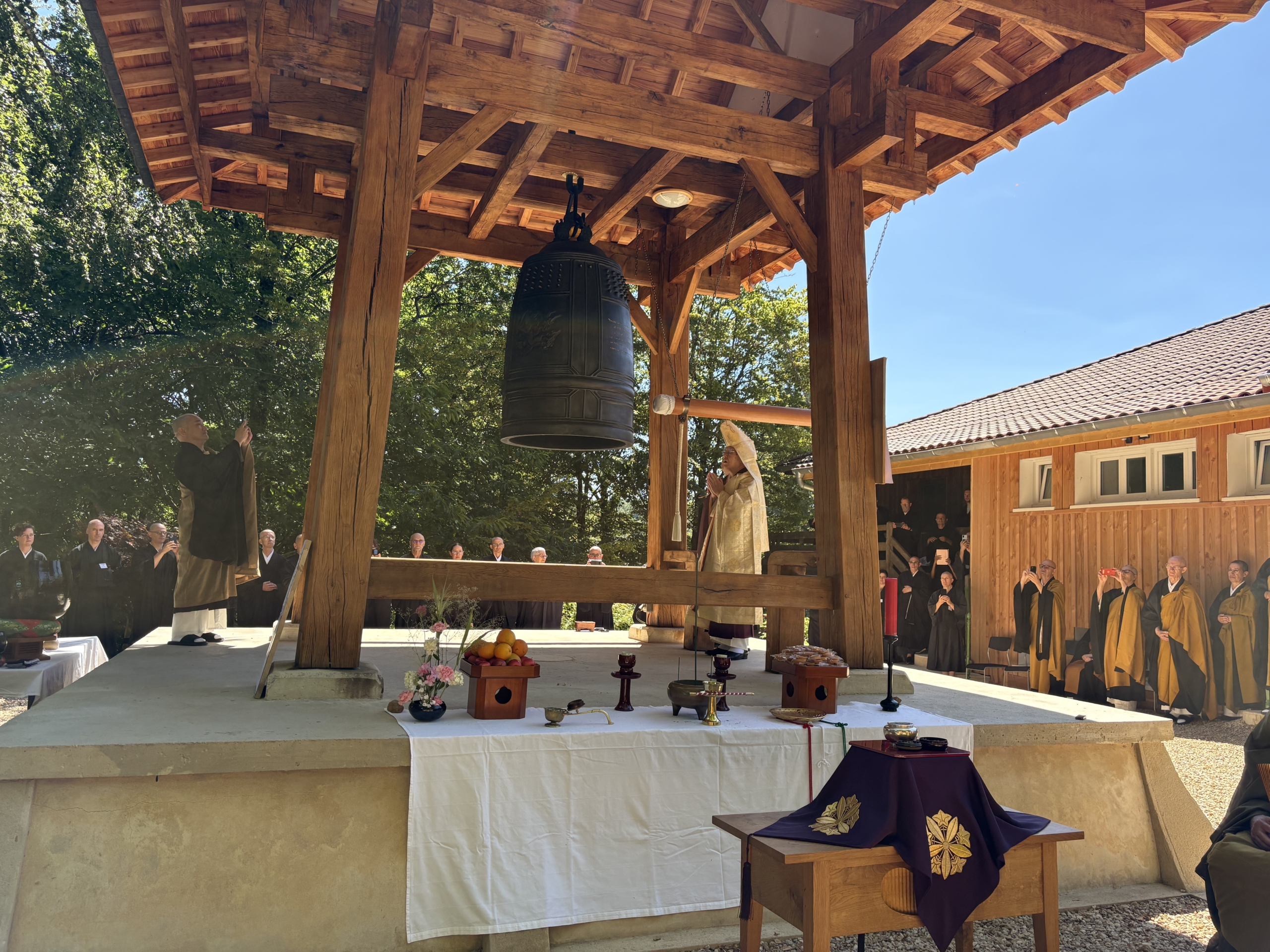
Also on the fourth day, a delegation from Eiheiji and Chuoji arrived from Japan, led by Abbot Chuko Kumagai Roshi, who, as Minamisawa Zenji’ss representative, presided over the inauguration ceremony of the bonshō. It was a beautiful ceremony, particularly moving for all those who had worked to bring the bonshō to Kanshoji.
The great bonshō offered by Minamisawa Dōnin Zenji now makes its voice resonate across Butsunanzan. At Kanshoji, those who hear the sound of this bell are called to awaken to the Way. Morning and evening, each toll of the bell resounds, awakening all sentient beings.
— Kumagai Chūkō Rōshi
Everything went wonderfully. Everyone was happy, smiling— impressed. As they left, everyone thanked Kanshoji for its hospitality and the organisation of the event. Since then, we have received many letters from kaitei, kyōshi and members expressing their joy and gratitude for having taken part in this event.
Finally, we unanimously decided to organise another O-jukai at Kanshoji in three years time, in 2029.
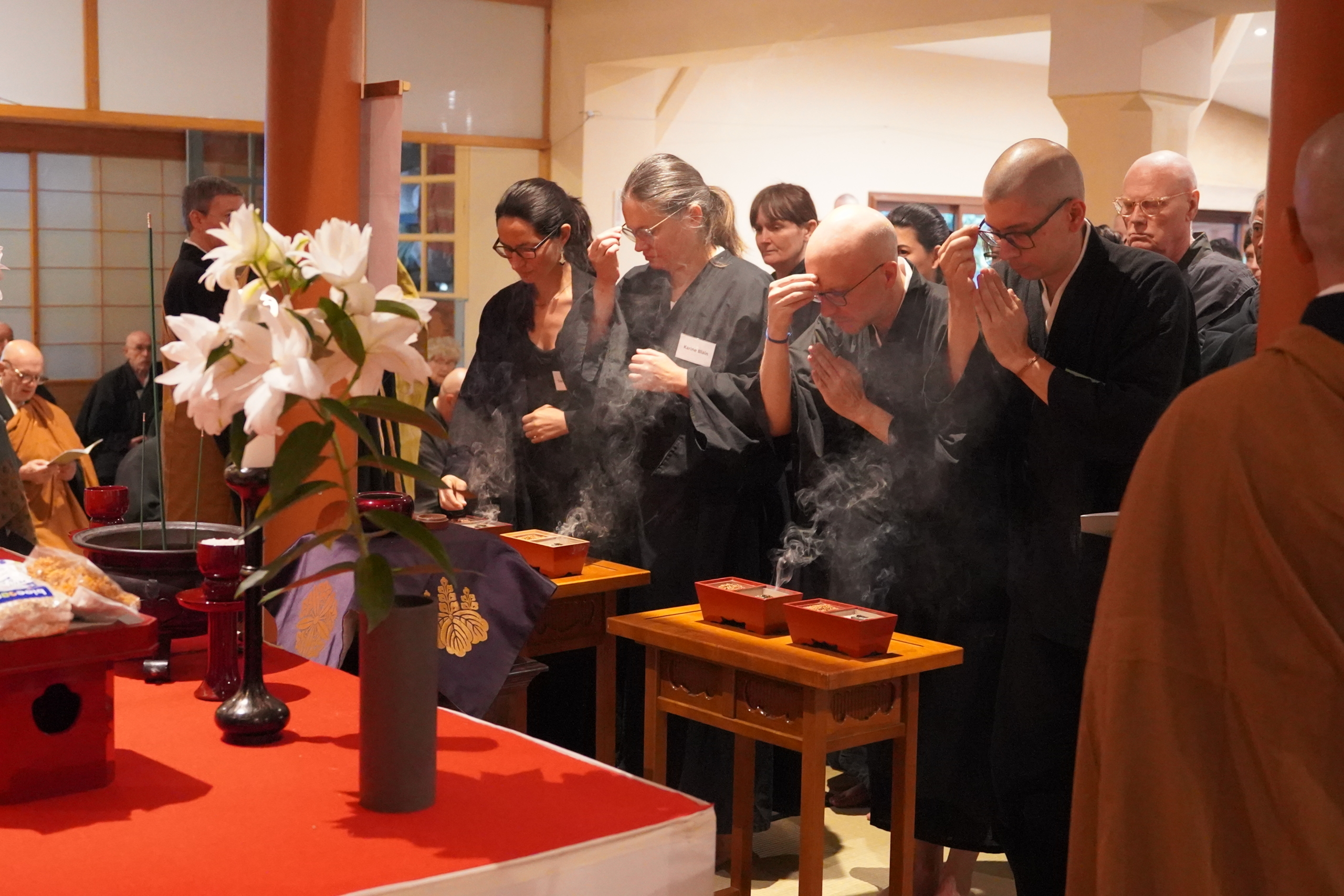
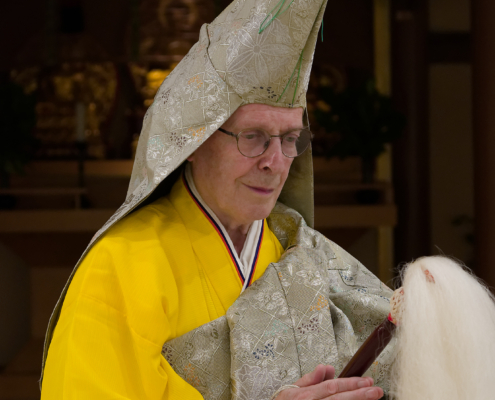
Taiun Roshi fully embraced the wishes left by Zenji Sama. As Precepts Master, he practised the great Dharma with calm, unwavering determination and great rigour. This attitude is the very expression of the spirit of the lineage that Zenji Sama devoted his life to cultivating. I witnessed the Great Way of the buddhas and patriarchs, the Way through which a disciple, revering their master, receives the master’s teaching and, in turn, transmits it by embodying it in their own life.
Through this Jukai-e, what I felt most strongly was that the Buddha Dharma does not depend on any one person. It is transmitted from master to disciple, and then to the generations that follow, sustained by gratitude towards those who came before us. The seeds of Awakening sown by Zenji Sama continue to grow vigorously within Kanshoji, and to spread ever more widely throughout the world.
— Rev. Itō Ryūkei